A leaning tree can be unsettling, especially when it stands near your home, driveway or a place where people gather. But a lean doesn’t always mean a tree is about to fall. Some trees grow at an angle naturally, while others begin leaning because their roots or trunk have been compromised. Knowing what to look for, and when to call a professional, can help you make a safer and more informed decision.
When a lean may be normal
Some trees develop a gradual lean as they grow toward sunlight or respond to prevailing winds. If the tree has leaned in the same direction for years, its trunk and branches appear healthy and the ground around its base is stable, the angle may be part of its natural growth pattern.
A tree’s shape can also be influenced by nearby buildings, other trees, or the slope of the land. The direction of the lean alone isn’t enough to determine whether a tree is dangerous. Its history, condition, root system, and surroundings all matter.
Signs a tree may have a problem
A change in a tree’s position deserves closer attention. A tree that has recently started leaning, or whose lean appears to be worsening, may be experiencing root failure or structural damage.
Look for warning signs such as:
- Cracked or lifted soil near the base: New mounds, gaps, or exposed roots can indicate that the root plate is shifting.
- A raised area opposite the lean: Soil lifting on one side of the trunk may suggest the tree is beginning to pull out of the ground.
- Cracks in the trunk or major branches: Splits can weaken the tree and may worsen under wind or the weight of snow and ice.
- Dead, hanging, or broken limbs: These may signal declining health or create an immediate hazard.
- Recent damage: Construction, trenching, excavation, or changes to drainage near the tree can affect its roots and stability.
- Sudden movement after a storm: Heavy rain and strong winds can loosen soil or damage roots, even if the tree still appears upright.
These signs don’t always mean a tree must be removed. They do mean it’s wise to get a professional assessment rather than trying to diagnose the problem from the ground.
Consider what the tree could hit
The potential consequences of a fall are an important part of assessing risk. A tree leaning toward an occupied home, a busy walkway, a driveway, or another structure deserves prompt attention—particularly if you’ve noticed new movement or damage.
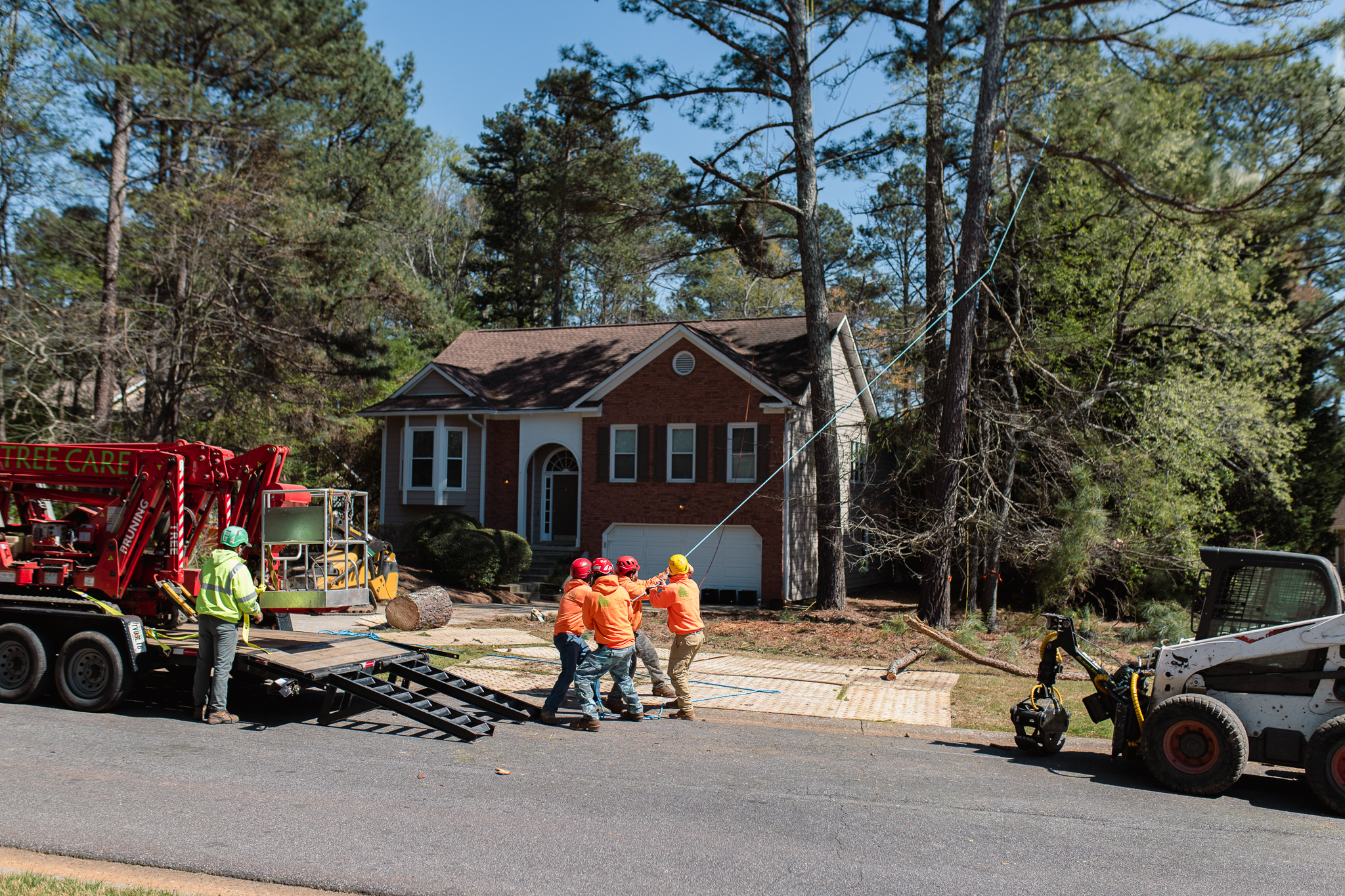
Keep people and pets away from the area if you’re concerned, and don’t attempt to pull, brace, or cut a leaning tree yourself. Avoid parking under it, and use another entrance or path if needed. If the tree appears to be moving or is an immediate danger, contact a tree care professional right away. Stay clear of downed trees or limbs near power lines and contact your utility provider or emergency services as appropriate.
Why call a professional?
Tree stability can be difficult to judge without training and experience. A qualified tree care professional can inspect the trunk, roots, soil, canopy,and surrounding site to determine whether the lean is longstanding or a sign of instability. They can then explain options, which may include monitoring, pruning, other care, or removal.
If a leaning tree could fall on a person, home, vehicle or other structure, don’t wait for it to become an emergency. Excel Tree Care is fully insured and has a Certified Arborist on the team. Serving Metro Atlanta, Excel Tree Care can assess your tree and help you understand the safest next steps.